
Author Archives: Bill Dalgetty

Angels — Reality or Myth?

jp-dress1-popupHave you ever experienced the presence of an angel? 
A number of years ago, after being with some business colleagues at a dinner on the upper west side of Manhattan, I started back to my hotel.  Because of the lateness of the hour, there were no cabs readily available so I started walking on Central Park West toward my hotel.  There was hardly anybody on the street and after walking a couple of blocks, I noticed a gang of five young men following about a block behind me.

As I picked up my pace, so did they.  I began to get concerned.  If I started to run, there was no place to run to.  All the shops and restaurants in the area were closed.  They got closer and closer, obviously intent on catching up with me.  Just then out of nowhere, a taxi came roaring up with the driver yelling at me to get in, which I did as he sped away.  On the way to the hotel, he hardly said a thing.  Upon arrival, I thanked him profusely and watched him drive away.

Was he just a benevolent New York City taxi driver who happened along on Central Park West late that evening and came to my rescue?  Given the circumstances and the quickness with which he appeared, I have always believed he was one of God’s angels assigned to look after believers.

The Bible is full of references to angels in both the Old and New Testaments.  Psalm 91 says, “He will command his angels concerning you to guard you in your ways.”  Psalm 34 says, “The angel of the Lord encamps around those who fear him, and he delivers them.”  An Angel held the arm of Abraham preventing the sacrifice of Isaac, wrestled with Jacob, and appeared to Moses in the burning bush.  An angel protected Shadrach, Meshach and Abednego from the flames of the furnace.

Angels appeared to Zachariah, Mary, Joseph and the shepherds in connection with the coming and birth of Jesus.  Angels told all who came to Jesus’ tomb that he had been raised from the dead.  An angel freed Peter from prison, and assured Paul that he and all those on board his ship would be saved from a shipwreck the next day.  Finally, an angel described to John what the new heaven and new earth would look like at the end of the Book of Revelations.

Paul describes angels as “ministering spirits, sent to serve, for the sake of those who are to inherit salvation.” (Heb. 1:14)  In describing the preeminence of Christ, Paul declares, “For in him were created all things in heaven and on earth, the visible and the invisible.” (Col. 1:16)  Angels are part of the invisible.   

The soul or inner person of an individual cannot be seen.  Yet, the actions of an individual reflect the nature of the soul.  So too, with angels.  Though they cannot be seen, their actions can be manifested in the results of their protection and the messages they convey.  

Just as we embrace on faith the words and events of Jesus’ life, including his resurrection and the outpouring of the Holy Spirit, so too, should we embrace on faith the action of angels in our lives.

No Law against the Fruit of the Spirit

f2227291104b8a23ab29fdc0bfbb3102Is it possible to live out our faith fully today without running afoul of some law or regulation?

Our culture seems to be keenly sensitive to whether Christians are imposing their religion on others.  This appears to be particularly true in the public square where nativity scenes are barred, and in the workplace where sharing your faith with a co-worker can provoke a harassment lawsuit.

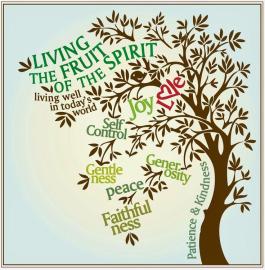
St. Paul describes a way to avoid these conflicts.  In his letter to the Galatians he talks about the importance of living by the Spirit.  He says that if we do, we will experience the fruit of the Spirit which is love, joy, peace, patience, kindness, goodness, faithfulness, gentleness and self-control.

He then declares, “Against such things there is no law.” (Gal. 5:23)

Our society is swamped with rules and regulations at every level of government.  We seem to measure the performance of our legislators by how many laws they can adopt.  According to the Competitive Enterprise Institute, 81,611 new pages of regulations were added to the Federal Register in 2015, covering all manner of conduct of businesses, professions, schools, churches, individual citizens, etc.

Yet, in the workplace, for example, there is no law or employee handbook that is going to prohibit supporting a co-worker in Christian love; being joyful in our countenance; promoting peace where there is conflict; being patient, gentle and kind in our relationships with co-workers, customers or suppliers; and being loyal and faithful to our employer and beliefs.

I have a friend who owns a freight forwarding business with warehouses in Chicago and Minneapolis.  He makes it a point to meet regularly with all his employees.  He tells the following story of employees in Chicago working overtime to help employees in Minneapolis.

Late one Friday night in Chicago, a truck arrived, carrying products to be delivered to customers in both Chicago and Minneapolis.  The truck had been loaded in a very random way with individual orders mixed up and paperwork not matching the orders.  An employee in Chicago, who had already put in a full day, could have just offloaded the items to be delivered in Chicago and sent the truck on its way.  Instead, he said, “Why don’t we unload the whole truck and reload it correctly for the guys in Minneapolis?”

It took two employees four hours, working into the wee hours of Saturday morning to identify, sort and reload a multitude of orders destined for Minneapolis.  As my friend observed, “This is a small story that could have gone unnoticed, but it is really huge because it reflects an attitude of the employees in Chicago who wanted to support the employees in Minneapolis who had just gone through a difficult time of changing warehouse locations.”

The Chicago employees were exhibiting the fruit of the Spirit in showing love, kindness, goodness and faithfulness to the employees in Minneapolis.  My friend, their employer, was pleased that they did.  

By exhibiting the fruit of the spirit, Christians demonstrate a clear contrast to much of today’s culture, and will evangelize more powerfully with their conduct than they ever could with their words.


Our Jewish Heritage

2-5-8_crippled_woman_torah_scrolls

As Christians, do we fully appreciate our Jewish heritage?

In Luke’s narrative of two disciples walking on the road to Emmaus, Jesus comes up along-side of them and asks what they are talking about.  Not recognizing him, they describe the astonishing events of Jesus’ arrest, crucifixion and supposed resurrection. They wonder what it all means.  Jesus gently chastises them for being slow of heart to believe all that the prophets had said about him, and that he had to suffer these things to enter into his glory.  “And beginning with Moses and all the prophets, he explained to them what was said in all the scriptures about him.” (Luke 24:13-35)

As Christians, it is tempting for us to focus primarily on the New Testament. Yet even the gospels in describing the life and words of Jesus, make numerous references to Old Testament events and prophesies.

In Genesis, God tells Abraham before he is circumcised and the Jewish covenant is established, that he will be the father of many nations. (Genesis 17:6)  He tells Moses that he will raise up a prophet like him who will teach people everything God commands. (Deut. 18:18)  There are of course numerous references in Isaiah to the birth and coming of Jesus, along with a description of his character and purpose. (Is. 7:14; 9:6; 40:10-11; Chapter 53 and more)

In Isaiah 53, the writer speaks of the suffering servant, Israel, which later becomes a description of Jesus, bringing redemption and salvation to a sinful world.  “Yet it was the Lord’s will to crush him and cause him to suffer, and though the Lord causes his life to be a guilt offering, he will see his offspring and prolong his days, and the will of the Lord will prosper in his hands.” (Isaiah 53:10)

Jesus connects us with the Jewish people and their heritage whether we realize it or not.

This heritage, which enriches the understanding of our Christian faith, is not unlike the Christian heritage provided by our parents and grandparents who leave us a legacy of teaching and example. 

Since my mother was Catholic and my father Baptist, growing up in the 1940’s and 50’s, I had the benefit of an ecumenical Christian heritage.  From my father and grandparents, I saw a steady faith with a focus on scripture.  From my mother I saw a special reverence and piety in her prayer and sacramental life.  From them flowed a conscience of right and wrong that carried me until the day I had my own personal encounter with Jesus and the power of his Holy Spirit in the context of my Catholic faith.

I will never know how much the prayers of my parents and grandparents influenced the course of my life, and its protection, but now having the vantage point of parent and grandparent myself, I suspect there was a considerable impact.  My wife would similarly testify to the influence of her parents and grandparents on her Christian faith today.

Heritage is part of God’s plan for his creation — each generation passing on how they have experienced God and what they have learned from the time of Abraham to the present day.  We Christians share so much with the Jewish people – the same God and father, the Ten Commandments, the Old Testament prophets, the wisdom literature, and the sacredness of life.  May we one day share the same Messiah!

Joy in God’s Will

gettyimages-632848772Where does joy come from?

In St. Paul’s first letter to the Thessalonians he says, “You became imitators of us and the Lord; in spite of severe suffering, you welcomed the message with joy given by the Holy Spirit.”  (1Th. 1:6)

Joy comes from the Holy Spirit.  In Galatians, Paul includes joy in a list of attributes which he says is the fruit of the Spirit.  It takes the Spirit of God to give us real and lasting joy – not just the emotion of momentary happiness, but the kind of joy that comes from the confidence of knowing we are loved by God and serve his purpose even though we may be suffering trials in the present moment.

Peace is a close cousin of joy.  It, too, is part of the fruit that comes from the Holy Spirit. The same pre-conditions are necessary – love of God, faith in his love of us, and having purpose that fulfills God’s will.

In John’s Gospel, Jesus says our joy will be complete if we obey his commands. “If you obey my commands, you will remain in my love, just as I have obeyed my Father’s command and remain in his love. I have told you this so that my joy may be in you and that your joy may be complete.” (John 15:10)

In recent weeks my wife, through her daily prayer, believed that she was sensing a nudge by the Lord to attend the March for Life that took place on the National Mall last Friday.  She signed up to join a group of people from our local church who had chartered a bus to attend the March.

What impressed her most about the march was the joy of the people and how peaceful it was.  Here you had up to a half million people, shoulder to shoulder, jammed into a fenced-in area on the mall and then the confines of Constitution and Pennsylvania Avenues, proceeding from the Mall to the Supreme Court.  The mood was joyful, and people were considerate and willing to help one another.  They were unified in their desire to uphold the dignity and sanctity of life.  Many had traveled thousands of miles to be there, a number on bus trips of more than 20 hours.

Like my wife, most people were there because they sensed that it was God’s will for them.  They were blessed by hearing inspiring speakers, and by being in solidarity with tens of thousands of others in a cause larger than themselves.  Equally important, they experienced the joy and satisfaction of knowing that their presence and sacrifice was pleasing to God.

Jesus said, “I do nothing on my own but speak just what the Father has taught me. I always do what pleases him.” (John 8: 28, 29)

“What is Truth?”

How ironic that Pilate would ask this question of Jesus, the embodiment of all truth standing right in front of him. 

The Jewish religious leaders wanted Pilate to execute Jesus for blaspheme and for claiming to be king of the Jews.  In examining Jesus, Pilate asked him if he was the King of the Jews.  Jesus responded, “You are right in saying that I am a king.  In fact, for this reason I was born, and for this I came into the world, to testify to the truth.  Everyone on the side of truth listens to me.” To which Pilate responded, “What is truth?” (John 18:37)

This was not the first time that Jesus spoke of testifying to the truth.  Earlier, he told his disciples, “I am the way and the truth and the life.” (John 14:6)  At the beginning of his gospel, John describes Jesus as, the word becoming flesh and dwelling among us, and then adding, “We have seen his glory, the glory of the One and Only, who came from the Father, full of grace and truth.”

From the beginning of human existence, people have been seeking the truth about the reason and purpose for their lives.  It is part of our created nature put there by God to facilitate our search for him.  Our souls are restless, but instead of seeking God, we seek peace in running after greater wealth, or position, or recognition, or pleasure, or knowledge separated from the context of God and his creation.

St. Augustine captured the issue well when he said, “You have made us for yourself, O Lord, and our heart is restless until it rests with you.” 

God became one of us in the person of Jesus, to help us better understand the truth from his words and example in order to free us from our sins.  Jesus said, “If you hold to my teaching…you will know the truth and the truth will set you free.” (John 8:31-32)

Conventional wisdom in today’s culture often runs counter to the truth and the ways of God.  We see the denigration of life through state funded abortion and legalized euthanasia. We see the elimination of nearly all restraints on sexual mores, and a Supreme Court overturning thousands of years of tradition and natural law in redefining marriage.

We see people confusing tolerance for mercy.  We see increasing relativism on issues of integrity based on personal choice and societal whim instead of God’s revealed truths as set out by Jesus.

Like Jesus, we have opportunities to testify to the truth in our words and actions with the people and circumstances in our daily lives.  The more we regularly read and study God’s Word the better equipped we are to live the truth ourselves and gently represent the truth with others when the opportunity arises. 

“Your word is a lamp to my feet and a light for my path. Your statutes are my heritage forever.”  (Psalm 119: 105, 111)

God’s Extravagance

water-features4How much wine is needed for a wedding? 

For the Wedding at Cana described in John’s gospel, the wedding party had run out of wine and the mother of Jesus asked him to remedy the problem.   John reports that Jesus instructed the servants to fill six stone jars with water holding 20 to 30 gallons.  He tells them to draw some out and take it to the headwaiter who tells the bridegroom that he has “saved the best [wine] till now.” (John 2:10)

This is Jesus’ first miracle, and how extravagant it is!  If we take an average of 25 gallons times six jars, we have 150 gallons of wine.  This would be equivalent to 757 bottles or approximately 63 cases.

This story reflects the extravagant love of God in many ways.  We begin with Mary, the mother of Jesus, interceding with her son for the first time on behalf of a likely friend to save the friend’s family from the embarrassment of running out of wine at their wedding.  My wife and I have hosted weddings for three daughters, and I can certainly relate to how embarrassing it would be to run out of wine or food at a wedding celebration.

God’s response to this need was far more generous than required, both in the quality of the wine and its quantity.  This is emblematic of what God has in mind for people who respond to him through his son.   

Jesus is the new wine, quite distinct in quality to the old wine offered by the prophets that preceded him.  This new wine allows people to experience God in the flesh, up close and in person.  This new wine gives new meaning to the Jewish law, teaching and writings.  This new wine reveals the power of God over demons, illness, and the physical elements of wind, storm and sea.  This new wine demonstrates the love of God for all people by becoming one of us and then enduring torture and death to free us from sin and leading us to a righteous life through the power of the Holy Spirit.

My wife and I have been blessed to experience the extravagance of God’s love and this new wine through the Christian heritage of parents and grandparents, through respective personal encounters with Jesus within a day of each other, and through the presence of Jesus and the power of the Holy Spirit in the daily action of our lives.

This extravagant love has been manifested through five children, four of whom are now raising Christian families themselves, meaningful work in the care of God’s creation, opportunities in ministry, Christian friends who support us in life and work, and a disabled adult child who teaches us each day about God’s love and ways.

God’s extravagant love and new wine are available to all who are willing to shed the old wine skin – the old way of life accompanied by sin and self-focus. (Mt. 9:17)  “Yet to all who received him, to those who believed in his name, he gave the right to become children of God.” (John 1:12)

We will never be able to match the extravagance of God’s love.  We cannot out-give him, out-sacrifice him, or out-love him, but we can return his love and generosity by opening the door of our hearts to his gentle invitation. “Here I am,” he says.  “I stand at the door and knock.  If anyone hears my voice and opens the door, I will come and eat with him and he with me.”  (Rev. 3:20)

He Came for All People

Who did Jesus come for? 

The first visitors of Jesus covered a broad spectrum of people.  We have the shepherds, who were poor, uneducated and likely represented the lowest end of the economic spectrum of that time.  Then we have Magi, who seemed to represent a kingly class, educated and wealthy.

The shepherds appeared to have nothing to offer the newly born Messiah other than themselves and their faith in believing that what the angels had told them was true.  The Magi, on the other hand, were learned astrologers who studied ancient writings and the heavens to discover the rising of a new star. Some scripture scholars believe that they were of a Persian priestly class.

The angel told the shepherds that Jesus had come for all people.  “I bring you good news of great joy that will be for all people.” (Luke 2:10)

The “good news” was not just for the shepherds or the Jewish people, but for all people.  All people included the unbelieving and pagan world of the Roman and Greek cultures; it includes people who are Muslim, Buddhist and Hindu.  It includes the atheists of our day.

Whether they know it or not, Jesus is everyone’s savior. 

The prophet Isaiah says that Jesus came for the poor, the brokenhearted, the captives, those who mourn and grieve, and those who are in despair and darkness.  He says that Jesus wants to give them a crown of beauty and a garment of praise so that they may become oaks of righteousness. (Is. 61:1-3)

While Jesus walked this earth he did exactly what Isaiah said.  Today, he expects to continue to do this, but through us by the power of his Holy Spirit.

For us, “everyone” includes the check-out clerk in the grocery store, the telephone solicitor who we hang up on, the person at work who is difficult to get along with, the person asking for money outside the metro station, the person who talks during church services or the children who can’t sit still.  “Everyone” includes those who think different politically than we do and even the terrorists who wish to do us harm.

Lord, when I see people you put in my life, let me look upon them with the understanding that you came for them just as you came for me.  It doesn’t matter who they are, what their religion, race, position or financial status is.  Your offer of salvation and new life is available to them.  Let me use the opportunity to introduce them to you first through my conduct and second by my words as you give me the opportunity.

John’s Gospel tells us that all who accept you, Lord Jesus, and believe on your name will become sons of God. (John 1:12)


God’s Confirmations to Mary and Us

untitledWhat was it that Mary was pondering in her heart following the visit of the shepherds?  (And Mary kept all these things, reflecting on them in her heart.” Luke 2:19)

Could it have been that the shepherds were confirming what the angel had separately said to her and Joseph, that she was to give birth to a son who was to be the savior of the world?   For an angel had told the shepherds, “Do not be afraid, for behold, I proclaim to you good news of great joy that will be for all people.  For today in the City of David a savior has been born for you who is Messiah and Lord.” (Luke 2:10-11)

How loving and merciful of God to give Mary these several confirmations of her momentous decision to say yes to his plan for her to be the mother of God becoming one of us!  

But God providing confirmation of important decisions is not confined to the Holy Family, but is something available to anyone who seeks an ongoing relationship with the Father and asks for guidance in the decisions of life.  Confirmations can take various forms – sometimes a word from a friend, sometimes a scripture that pops out at us, and sometimes even an extraordinary event.

Let me share a story involving my mother when I was teenage boy, growing up in Mason City, Iowa.  I was born with a deformed sternum bone that was inverted inward and had the effect of crowding my heart and lungs as I grew older.  When I was 15, it was determined that it was causing my heart to enlarge with serious consequences on my future health and life expectancy.  A thoracic surgeon in Des Moines had developed a procedure where the sternum bone would be cut from the rib cage lifted out and a bone strut placed across the ribs from one side to the other and then the sternum laid back down over the strut with everything wired back together.

Since this was in the 1950’s and the surgery was considered unusually invasive and experimental, my parents agonized over the decision to proceed.   After seeking second opinions, deliberating extensively and praying, they decided to go forward with the surgery.

The Sunday before we were to travel to Des Moines for the surgery, my mother was earnestly praying at mass, asking God for some kind of assurance that they were making the right decision.  As she was praying, she felt a hand on her shoulder.  It was quite distinct.  She paused, looked behind her, but there was no one in the pew behind her or anywhere nearby.  She knew it was a confirmation of their decision to go ahead with the surgery.  Sixty-two years later, I am still here to share the story.

“And Mary kept all these things, reflecting on them in her heart.”


Why We Celebrate Christmas

thenativity%20600%20x%20300After hearing the Christmas story over and over, year after year, we might be tempted to take it for granted.  Yet if we think about it, God’s willingness to become one of us is the greatest act of humility and love in all of human history.  “The Word became flesh and made his dwelling among us” John 1:14

Here we have God, the Father, creator of all that exists, creator of the millions of galaxies and the billions of stars whose distance is measured in light years; this God who created the atom and the molecule whose size is measured in nanometers – that’s one billionth of a meter; this God who created the human being with a body, soul, spirit and mind, became one of his created in order to free each of us from our sins and the world from its bondage to sin – to reconcile us to him and one another.

Father William Barry, in his book, A Friendship Like No Other, says, “God took humanity seriously enough to become one of us, and we do God no service if we downplay what God has done in becoming human.”

God in Jesus was a real human being, born of Mary in the humblest of circumstances in a cave or stable with animals nearby.  He had to be toilet trained, learn a language, be raised by real parents, work out his vocation and discern the will of God just as we do.   His family was forced into exile to Egypt to escape the sword of Herod.  After assuming his public ministry, the leaders of his own religion handed him over to the Romans to die a horrible death.  God is no stranger to suffering.  God in Jesus knows what human life is like from the inside.  His desire for friendship and to dwell with us and in us knows no bounds.

A cobbler does not become a shoe, a cabinet maker does not become a cabinet, but God the Father and creator of all that exists became one of us.  Little wonder that history’s calendar is measured in terms of before and after this event.

Let us celebrate the birth of Jesus for what it is – the greatest act of humility and love in all of history.

An Incarnation Analogy

dsc00166-jpgc200Do you ever struggle with grasping the full meaning and purpose of God becoming one of us in the person of Jesus Christ?   

For many years radio commentator Paul Harvey shared the following story at Christmas to help us understand.

—————-

The man to whom I’m going to introduce you was not a scrooge; he was a kind, decent, mostly good man; generous to his family, and upright in his dealings with other men.  But he just didn’t believe all that incarnation stuff which the churches proclaim at Christmas time.  It just didn’t make sense and he was too honest to pretend otherwise.  He just couldn’t swallow the Jesus story, about God coming to Earth as a man.

“I’m truly sorry to distress you,” he told his wife, “but I’m not going with you to church this Christmas Eve.”  He said he’d feel like a hypocrite.  That he’d much rather stay at home, but that he would wait up for them.  And so he stayed and they went to the midnight service.

Shortly after the family drove away in the car, snow began to fall.  He went to the window to watch the flurries getting heavier and heavier and went back to his fireside chair and began to read his newspaper.  Minutes later he was startled by a thudding sound…then another, and then another.  Sort of a thump or a thud…at first he thought someone must be throwing snowballs against his living room window.  But when he went to the front door to investigate he found a flock of birds huddled miserably in the snow.  They’d been caught in the storm and, in a desperate search for shelter, had tried to fly through his large landscape window. 

Well, he couldn’t let the poor creatures lie there and freeze, so he remembered the barn where his children stabled their pony.  That would provide a warm shelter, if he could direct the birds to it.  Quickly he put on a coat, galoshes, tramped through the deepening snow to the barn.  He opened the doors wide and turned on the light, but the birds did not come in.  He figured food would entice them.

So he hurried back to the house, fetched bread crumbs, sprinkled them on the snow, making a trail to the yellow-lighted wide open doorway of the stable.  But to his dismay, the birds ignored the bread crumbs, and continued to flap around helplessly in the snow.  He tried catching them…he tried shooing them into the barn by walking around them waving his arms…instead, they scattered in every direction, except into the warm lighted barn.

And then he realized that they were afraid of him.  To them, he reasoned, I am a strange and terrifying creature. If only I could think of some way to let them know that they can trust me…that I am not trying to hurt them, but to help them.  But how?  Because any move he made tended to frighten them and confuse them, they just would not follow.  They would not be led or shooed because they feared him.

“If only I could be a bird,” he thought to himself, “and mingle with them and speak their language.  Then I could tell them not to be afraid.  Then I could show them the way to safe, warm…to the safe warm barn.  But I would have to be one of them so they could see, and hear and understand.”  At that moment the church bells began to ring.  The sound reached his ears above the sounds of the wind.  And he stood there listening to the bells, listening, listening to the bells pealing the glad tidings of Christmas.  And he sank to his knees in the snow.


Have a blessed Christmas!