Searching for Fine Pearls

“The kingdom of heaven is like a merchant searching for fine pearls. When he finds a pearl of great price, he goes and sells all that he has and buys it.” (Matthew 13:45-46)

These are words from one of Jesus’ parables describing what the kingdom of God is like. The fine pearl is Jesus.

Are we willing to sell everything we have to acquire a friendship with Jesus? Selling everything may include giving up old ways and acquiring new ones. Changing our focus from self to others, finding balance between career and family, stepping back from gossip, listening more and talking less are just a few examples.

Throughout human history, people have been searching for meaning and purpose for their lives. Even ancient civilizations seemed to sense that there had to be more to life than food, shelter and clothing. Their observations of the natural world around them indicated a power and force greater than themselves.

In my mid-thirties, I met Jesus in a new and personal way. Many of my priorities began to change, particularly with respect to balancing the demands of career and family. Previously, career had often taken precedence. One aspect accompanying the focus on career was joining work colleagues at a local watering hole after work on Fridays instead of going home and having dinner with my family. After a new relationship with Jesus, I gave up this practice. Then several months later I joined the group once again. Since I had been very open in sharing about my renewed faith, one colleague sarcastically asked, “What are you doing here? You don’t belong here.” I said, “You’re right,” turned around and left, never to join them again.

If the pearl is friendship with Jesus and coming to know God, then there are also some new things we might want to consider. Friendships don’t just happen without time together and coming to know the person involved. Previously, my time in prayer was confined to Sundays at mass or saying grace at meals. Subsequently, God gave me a desire to spend time with him every day, and I changed my schedule to spend about 30 minutes with him every morning before breakfast. Over the last 40 years, we have been meeting for coffee nearly every morning. Previously, I hardly ever read the Bible. Now it is a part of each day’s prayer time. While I am still a sinner, reading Scripture daily helps me come to know God better and take on the mind of his Son.

The irony in all of this is that the things I gave up that I thought were a sacrifice at the time do not now seem to have much importance. Instead, as the parable says, there is great joy in finding the treasure.

Are you willing to sell all that you have to find the pearl of great price, Jesus?

Are We Good Tenants?

“A man planted a vineyard, leased it to tenant farmers, and then went on a journey for a long time.” (Luke 20:9)

Jesus had just entered Jerusalem in a triumphal way. He had cleared the temple of the moneychangers and was teaching in the temple courts. A few days earlier, he had raised Lazarus from the dead. The chief priests and elders were challenging Jesus and asking by what authority he was doing all of these things. Jesus responds with the parable of the tenants (Luke 20:9-19), which may be viewed as follows:

A man planted a vineyard – God created all that exists.

The man rented the vineyard to some tenant farmers – God entrusts creation to us and gives us dominion over it with the specific instruction “to cultivate and take care of it.” (Gen. 2:15)

At harvest time he sent his servants and subsequently his son to collect some of the fruit, but the tenants beat the servants and killed the son, claiming the vineyard for themselves. Just as the tenants attempted to claim ownership of the vineyard, so has the human race attempted to claim ownership of creation, denying the creator and determining for itself what is right and wrong, true or false.

The response of the vineyard owner was harsh. He killed the tenants and gave the vineyard to others. The chief priests and elders realized Jesus was talking about them.

What kind of tenants are we of the responsibilities God has entrusted to us? He gives each of us a lease of time in this physical world with varying durations. He entrusts us with various talents. He puts people in our lives. He has a job or work that is to be our contribution to taking care of his creation. He expects some fruit to come from his lease to us. For me and many of us, any review of our lives will likely produce a mixed report with both positive and negative fruit.

Recently I was rereading a book of letters our adult children had put together from family and friends to celebrate a particular birthday of mine a few years ago. In the letters from the children were various memories of when I spent time with them while they were young, playing a game, taking a hike, building something, making a trail through the woods or sharing some advice which they had requested of me. Most of these moments I had forgotten, but they had not. While I may not have realized it then, these times given to me by God in my lease from him were bearing fruit, and may have contributed in some small way to where our children are today, all Christian adults with families of their own and bearing fruit in their turn.

Time, spouse, children, work, friends, ministry and faith — all are part of the lease God gives to each of us. All are precious seeds waiting to bear fruit for the Lord under our tenancy.

Reflect on what kind of tenant you have been of God’s lease to you. Are there any changes you would like to make going forward?

A Peace the World Cannot Give

“Peace I leave with you; my peace I give to you. Not as the world gives do I give it to you. Do not let your hearts be troubled or afraid.” (John 14:27)

The entire world is in turmoil at this moment over the Coronavirus pandemic. More than three million people have been infected worldwide and more than 200 thousand have died. In the United States almost one million people have been infected and more than fifty-five thousand have died. With widespread stay-at-home orders, our economy has gone from having one of the lowest unemployment rates in history just two months ago, to more than 26 million people filing for unemployment benefits in the week ending April 18. Anxiety and fear are running high due to both the disease and its economic consequences.

It might be well for us to reflect on Jesus speaking of peace to his disciples both before and after his death and resurrection. “Peace be with you,” were his first words to them following his resurrection. (Luke 24:36) Three days earlier they had seen him die a tortuous death. They were still hiding behind locked doors for fear of the Jewish leaders. Their hopes that he was the Messiah were dashed. The last thing they expected to see was Jesus in their midst. They were in need of his peace

Jesus’ word to us in the midst of the challenges we face today is also peace. “My peace I give to you,” he says. It is the ultimate gift! It is a peace we cannot get from the world. Let me share a story to illustrate, not about the current crisis, but a personal crisis that took place a number of years ago.

It started with a call from my urologist, “You have an aggressive and an advanced form of prostate cancer.” I was shocked and initially fearful. I was prompted to let friends and family know and ask for their prayers. As I started to receive the assurance of their prayers and concern, I began to experience God’s love and peace.

Like the disciples, I needed to realize that Jesus was in my midst in order to receive his peace. He was with me in the numerous acts of love from my wife, my children, and my brothers and sisters in Christ. He was with me as a good brother inveigled his way into the pre-op room and led the doctors and nurses circled around my bed in prayer for the surgery. He was with me through adult children who left their own families to spend time with me. He was with me through my wife who was a constant support and always present. He was with me in the quiet times as he whispered to my spirit.

Thirteen years later, my PSA, the marker for prostate cancer, has started to creep back up beyond the level of recurrence. We are monitoring while I wait for an NIH trial of a new type of scan that detects very small metastases that can then be treated with targeted radiation. Jesus’ peace is still present.

How do you seek peace? Have you asked Jesus to come into your midst?

Signs of God’s Presence

For our gospel did not come to you in word alone, but also in power and in the Holy Spirit and with much conviction.” (1 Thessalonians 1:5)

St. Paul is telling the Thessalonians that he knows that they were chosen by God because the gospel came to them not only with words, but with power in the Holy Spirit.

We see in both Jesus’ ministry and that of the apostles that signs and miracles often accompanied the proclamation of the gospel. Peter healed a cripple from birth as he and John entered the temple. (Acts 3:1-10) The Book of Acts reports, “Many signs and wonders were done at the hands of the apostles.” (Acts 5:12)

In the late 1970’s my wife and I were prayed with for the baptism in the Holy Spirit. We each experienced a renewal of our faith and the presence of God in a way we had not before. A year later we attended a Jesus ’79 rally in the old Shea Stadium in New York along with several friends from our parish prayer group. After listening to a talk on healing, the speaker asked the 30,000 people in attendance to turn to one another and pray for any needs of healing.

Our friends, said, “Let’s pray for Bill’s eyes.” (I had been previously diagnosed with glaucoma and experienced the loss of about 30% of my field of vision.) They laid hands on me and prayed that my vision would be restored. The following Monday morning, I just happened to have one of my quarterly examinations with my ophthalmologist and he just happened to conduct an annual field of vision test. As he conducted the test I began to hear him say “hum” repeatedly. After about the fourth “hum” I asked if there was something wrong. He said, “Well, you seem to have a full field of vision.” I said, “I thought you told me I could never recover the vision I had lost. He said, “Yes, I did.”

I then told him where I had been on Saturday and how some friends prayed with me for healing, and he said, “I will take all the help I can get.”

To our friends and us, it was a physical affirmation of God’s presence in our lives, a sign of the power of the Holy Spirit working in us and the world today. We weren’t looking for a sign in order to believe. We believed and would have continued to believe even without the sign. But it built up our faith, and affirmed the reality of God’s presence and love for us.

Signs of God’s presence can take many forms. Perhaps the most powerful and lasting is a changed heart. Jesus’ self-invitation to Zacchaeus’ house was not accompanied by a physical sign of healing, but it did result in a changed heart with a far more enduring effect on Zacchaeus and no doubt the people in his life. (Luke 19:1-10)

How have you seen a sign of God’s presence in your life?

Seeing the Risen Jesus

“And it so happened that while they were conversing and debating, Jesus himself drew near and walked with them, but there eyes were prevented from seeing him.” (Luke 24:15)

Jesus’ followers saw him die, and they saw the tomb where he was laid. The trauma of his tortuous death was indelibly printed on their minds and would not be easily removed.

Now he was appearing before them, but they did not recognize him. Mary Magdalene did not recognize him until he said her name. The disciples on the road to Emmaus did not recognize him though he walked with them until nearly dark explaining the scriptures. Only as he broke bread with them as they began to eat were their eyes opened. (Luke 34:13-35)

Overcoming our paradigm of death and its irreversible nature is no small matter. It was true for the disciples and it is true for us. Yet, that is exactly the hope that God offers on Easter morning in the person of his son, Jesus. With his resurrection he showed us that life does not end with our physical death. Who we are has less to do with our physical nature than with our soul and spirit, which are a created by God and mysteriously joined with our physical nature at conception.

Jesus bequeathed to both the disciples and us something to take the place of his physical presence – the Holy Spirit, which he described as giving us the power to be his witnesses to the ends of the earth. The Holy Spirit enables the words of Jesus to become a reality in our lives — he is in us and we in him just as the Father is in him and he is in the Father. He says the result is that, “Anyone who has faith in me will do what I have been doing. He will do even greater things than these…so that the Son may bring glory to the Father.” (John 14:12-13)

With the power of the Holy Spirit, we can experience Jesus’ personal presence in our daily lives. For me, this first happened on an October evening many years ago when I met him in a new and personal way. I see him every day in the big bright smile of our daughter born with Down syndrome whose many hugs reflect her natural inclination to love.

I see him in the love of my wife and all or our children and grandchildren as they respond to his love for them. I see him in the inmates of the local jail who accept the humility of their present circumstance and seek the sacrament of reconciliation. I see him in college students we know who postpone career decisions to serve him in Christian outreaches to impoverished areas and on College campuses. And, I experience him in the sacraments of the church.

Where do you see the risen Jesus?

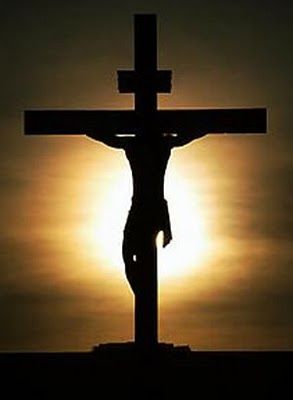
The Message of the Cross

“The message of the cross is foolishness to those who are perishing, but to us who are being saved it is the power of God” (1Cor. 1:18)

To the Romans and the people of Jesus’ day, the cross was a symbol of dominance, suppression and death. To the Christian, the cross is a symbol of love, giving of self and the ultimate sacrifice.  God’s power and wisdom are made visible in love, sacrifice and the subordination of our will to his.

Out of love for the Father and us, Jesus subordinated his will to the Father and sacrificed his life on the cross. As a result, God overrode the physical laws of nature and raised him to life, an exercise of power that the world had never seen before nor has ever been able to replicate.

When the world exercises power, the consequences are experienced and then fade, becoming just a chapter in history. Throughout history we have seen worldly powers come and go, but the power of God remains. God’s power in a kind word, an act of love or sacrifice, and their consequences last forever. Not so with the power of the world.

We lament our sins and those of others, and we lament the policies and power of governments that detract from life, liberty and the pursuit of happiness, but the cross of Jesus and all that it is and all that it represents in the wisdom and power of God is the antidote to our lament. It may seem as foolishness to the world, but to us, both individually and collectively, it provides the inspiration, instruction and saving power of God. No matter what has happened in our lives, it provides the opportunity for forgiveness, redemption and renewal here and now, as well as for eternity.

Today, we have many in the medical profession, doctors, nurses, emergency medical technicians, and other first responders who are exposing themselves to the coronavirus to aid the critically ill. They are living out the message of the cross in potentially sacrificing their lives out of love and service for others in need.

This may seem foolish to some, but it is the cross of Christ being embraced. It is the power of God being displayed.

How have you embraced the cross in loving and serving God and others?


Separated – But Not from God’s Presence

We enter our third week of nearly complete separation from other people because of the Coronavirus. This is an unprecedented moment in our nation’s history as nearly all social and most commercial intercourse is curtailed. Our government calls for social distancing – no church, no school, no spectator sports or entertainment, no gatherings greater than ten. In public and commercial settings we are to separate ourselves by six feet. We have March Madness but without basketball.

While the virus separates us from one another and the rest of the world, it does not separate us from God. Jesus’ final words to the disciples were, “And behold, I am with you always, until the end of the age.” (Mt. 28:20)

Before his arrest, he told the disciples, “On that day [his resurrection] you will realize that I am in my Father and you are in me and I in you.” Later he says, “Whoever loves me will keep my word, and my Father will love him, and we will come to him and make our dwelling with him.”

Jesus promises to dwell in us if we love him and keep his word. We may be temporarily denied his presence in the Eucharist, but not his presence in us through the Holy Spirit.

In the Book of Revelation, Jesus reasserts this promise. “Behold, I stand at the door and knock. If anyone hears my voice and opens the door, I will enter his house and dine with him, and he with me.” (Rev. 3:20)

As we open the door of our hearts to Jesus, he promises to enter and take up residence. There are no qualifications or limitations to this statement. Wherever we are, whatever the circumstances, Jesus is available to us. What a promise! We can have a conversation with him just as we have a conversation with a loved one, a friend or colleague.

For many years I have been meeting with Jesus every morning for coffee. I read his word, share with him my concerns, ask for his help for various needs on behalf of my family, friends, and myself, and seek his guidance on various choices I face on daily basis.

Our family misses coming together with others for mass on Sundays and with other Christian friends on other occasions, but we are not separated from God’s presence in the midst of this present worldwide medical and economic crisis.

We cannot yet imagine how God will use and work during this time. As Paul says, “We know that all things work for good for those who love God, who are called according to his purpose.” (Romans 8:28)

How are you using this extraordinary time of restricted activity? Are you taking advantage of God’s presence? Are you taking time to open the door of your heart to him?

Faith and Uncle Tut's Outboard Motor

“’If only I can touch his cloak, I shall be cured.’ Jesus turned around and saw her, and said, ‘Courage, daughter! Your faith has saved you.’” (Matthew 9:21-22)

Have you ever noticed how often Jesus said to someone, “your faith has healed [saved] you?” We see it in the above reference to the woman who had been hemorrhaging for 12 years. She pushed through a crowd crushing around Jesus, hoping only to touch his cloak. (Luke 8:43-48)

We see it with Bartimaeus, the blind beggar sitting by the road outside of Jericho, persisting in calling out to Jesus as he passed even though the crowd attempted to silence him. (Mark 10:46-52)  We see it in the friends of a paralytic who went to the extraordinary efforts of taking him upon on a roof and then lowering him down through the tiles in the middle of a crowd in order to get him to Jesus. (Luke 5:18-26)

In each of these instances it was the actions that these people took based upon their faith that brought forth a response from Jesus.   

Faith is incomplete without some kind of action. We need to act on our faith in order for it to have effect. It usually requires that we go out on a limb and risk failure, embarrassment, or disappointment. Here is a small example.

A number of years ago three of my daughters and I were water skiing in Uncle Tut’s boat in the sound between Holden Beach, NC and the mainland when the outboard motor conked out. He tried to start it several times, he fiddled with a number of adjustments, but nothing seemed to work. It was getting late in the day. There were no other boaters in the area. He had no VHS radio, and it was a time before cell phones. We just sat there in the middle of the sound, unable to get back to the landing. I started to silently pray that the motor would start.   Uncle Tut kept pulling at the starter cord, but nothing happened.

I got a sense that I needed to pray out loud so Uncle Tut and my daughters could hear me. As Tut was giving it another pull, I shouted, “Lord Jesus, start the engine!” Varoom, the motor started right up. Uncle Tut, who loved to tell stories, told this story for years – how my prayer started his motor when nothing else could.

Every day we have opportunities to act on our faith. If we see a questionable business practice, our faith in Christ should enable us to speak up for integrity. If a friend is discouraged, our faith should motivate us to provide encouragement. If someone needs to talk, our faith should be willing to listen. If we see a need for healing, our faith should be willing to offer to pray with the person. If we need healing, our faith should be willing to ask others to pray with us.

Are you willing to risk, in order to activate your faith?

Following Jesus at a Distance

“Peter followed him at a distance into the high priest’s courtyard, and was seated with the guards, warming himself at the fire.” (Mark 14:54)

Like Peter, we may profess our allegiance to Jesus that “even though all should have their faith shaken, mine will not be.” We may recite the creed every Sunday declaring that we believe in “God the Father almighty, Creator of heaven and earth, and in Jesus Christ, his only Son, our Lord.”

Yet, like Peter, there may be times when we keep our distance from Jesus. We may fail to show up for a daily prayer time we set for the beginning of each day. After a busy week of work, and a Saturday filled with our kid’s sports activities, we may let a round of golf take precedence over our attending mass on Sunday.

We may fail to respond to a friend’s request for help because it is not convenient. We may put a higher priority on our comfort as Peter did when he warmed himself by the fire.

Like Peter, we may be thrust into circumstances where we are reluctant to be identified with Jesus. In Peter’s case, it was the guards, the elders and the mob. For us, it may be a boss who has disdain for God, or social friends who consider any reference to Jesus as foolishness.

Early in my career when I attended company meetings followed by cocktails and dinner, the conduct could sometimes get a bit macho and boisterous. It was not unusual for the conversation to involve exaggerated exploits, the building up of self and the putting down of others, off-color jokes, gossip, and the fawning over whoever might be the most senior person present. At some point I began to realize that when I went along with this kind of conduct I was distancing myself from Jesus. It was so easy to go with the flow and tempting to want to be a part of the group. It required a decision on my part not to participate.

Just as Peter’s faith was tested, so is our faith tested in numerous ways, some obvious and significant, others subtle and small. From a faith perspective, the subtle can cause as much harm as the obvious because of their corrosive effect.

The world inclines us to keep our distance from Jesus, while Jesus bids us to draw near. He says come to me all who are burdened from the cares of this world and I will give you rest. Come to me all who are thirsty for meaning in life and I will give you understanding. He says step across the distance that separates us, and you will experience my love, my strength and my peace. He warns us that in the world we will have trouble, but assures us that he has overcome the world.

Are there times when you follow Jesus at a distance?

Waiting on the Lord

“The Lord is waiting to show you favor… blessed are all wait for him.” (Isaiah 30:18) 

Have you ever grown impatient with a prayer request to the Lord?

In the course of our daily lives we place numerous requests before the Lord seeking his blessing and response. We pray for a new job if we have been laid off; the conversion of a loved one or friend; the reconciliation of an alienated relative; the admission to the right college for a family member; the healing of an illness or physical injury for ourselves or others. The examples are endless.

Jesus, of course, encouraged us to pray constantly for our needs and gave us a model in the Lord’s Prayer which contains several requests. He also encouraged us to be patient and persevere in prayer and never give up as illustrated in the parable of the persistent widow. (Luke 18:1-8) 

Our experience suggests that there is often a time of waiting between when we offer up our prayer and when it appears to get answered. I had this experience one summer when my sixteen year old grandson, Mark, and I went on a two day boating and fishing trip down the Potomac River south of Washington, DC.

Our plan was to travel down the Potomac about thirty-five miles, stop at various locations to fish, eat the fish we caught for dinner, stay overnight on the boat, and head back the next day, doing the same thing.

At the beginning of the first day I prayed fervently that the Lord would bless Mark with being able to catch many fish. So we proceeded to our first spot on Mattawoman Creek that is usually a sure bet for at least a catfish. We fished for over an hour, but were not even getting a bite. We then proceeded to a nice area just north of the Quantico Marine Base. Again, nothing!

I prayed, “Lord, what’s going on? We should have been able to catch something by now.” So we made a couple of sandwiches, had lunch, and then proceeded further south. I could tell Mark was getting discouraged because he decided to take a nap. We headed down to Fairview Beach where the Potomac turns east for a few miles before it turns south again just north of the 301 Bridge.

It was now later in the afternoon, so we only had about an hour before we had to arrive at a marina where we had a slip reserved for the evening. We stopped at an area where there is an underwater ledge which drops from fifteen to sixty feet. We started fishing. I’m praying, “Lord, we’re running out of time.   We made no other provision for dinner.” Then Mark yelled, “I got one!” And indeed he did, a nice size catfish that ended up being more than two hungry fishermen could eat for dinner.

The Lord’s timing was perfect. It made Mark’s catch all the more memorable. Later that night and the next day we caught several more fish.

Are you willing to wait on the Lord for his perfect timing?