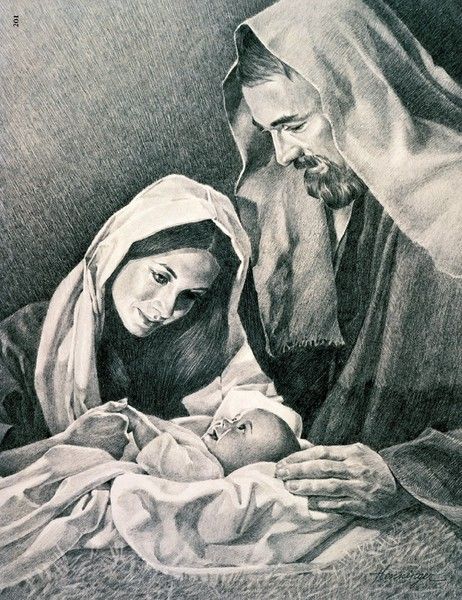
He Came for All People

“Do not be afraid; for behold, I proclaim to you good news of great joy that will be for all people.” (Luke 2:10)

These are the words of the angel who appeared to shepherds in the region where Mary gave birth to Jesus.  The angel told the shepherds that Jesus had come for all people.

The “good news” was not just for the shepherds or the Jewish people, but for all people.  All people included the unbelieving and pagan world of the Roman and Greek cultures at the time.  It included the Magi, educated and wealthy, and believed to have come from Persia.

Jesus is everyone’s savior. 

The prophet Isaiah says that Jesus came for the poor, the brokenhearted, the captives, those who mourn and grieve, and those who are in despair and darkness.  He says that Jesus wants to give them a crown of beauty and a garment of praise so that they may become oaks of righteousness. (Is. 61:1-3)

While Jesus walked this earth he did exactly what Isaiah said.  Today, he expects to continue to do this, but through us by the power of his Holy Spirit.

For us, “everyone” includes the check-out clerk in the grocery store, the telephone solicitor who we hang up on, the person at work who is difficult to get along with, the person asking for money outside the metro station, the person who talks during church services or the children who can’t sit still.  “Everyone” includes those who think different politically than we do and even the terrorists who wish to do us harm.

Lord, when I see the people you put in my life, let me look upon them with the understanding that you came for them just as you came for me.  It doesn’t matter who they are, what their religion, race, position or financial status is.  Your offer of salvation and new life is available to them.  Let me use the occasion to introduce them to you through my conduct and words as you give me the opportunity. 

John’s Gospel tells us that all who accept the Lord Jesus, and believe on his name will become sons of God. (John 1:12)

Do you look on the people you encounter in your life as people Jesus came for?

Why We Celebrate Christmas

After hearing the Christmas story over and over, year after year, its true meaning and impact may fade against the backdrop of today’s culture.  Yet, if we think about it, God’s willingness to become one of us is the greatest act of humility and love in all of history.  In John’s Gospel we read, “The Word became flesh and made his dwelling among us.  We have seen his glory, the glory of the One and Only, who came from the Father, full of grace and truth.” John 1:14

Here we have God the Father, creator of all that exists, creator of the millions of galaxies and the billions of stars whose distance is measured in light years. Here we have God who created the atom and the molecule whose size is measured in nanometers – that’s one billionth of a meter.  This God, who created the human person with a body, soul, and mind, different from all other creatures, became one of his created in order to free each of us from our sins and the world from its bondage to sin – to reconcile us to him and one another.   

Father William Barry, in his book, A Friendship Like No Other, says, “God took humanity seriously enough to become one of us, and we do God no service if we downplay what God has done in becoming human.” 

It seems like it is easier for us to view Jesus in his divinity than it is for us to accept fully his humanity.  But God in Jesus was a real human person, born of Mary in the humblest of circumstances.  He had to be toilet trained, learn a language and be raised from childhood to an adult just as we all have been.  He evidently followed his earthly father, Joseph, in the trade of being a carpenter, for the people of Nazareth were later to ask, “Is this not the carpenter, the son of Mary?” (Mark 6:3)

After assuming his public ministry, the leaders of his own religion rejected him and handed him over to the Romans to die a horrible human death.  We can be sure that Jesus’ humanity felt the sting of the whip and the piercing pain of the nails.  God is no stranger to suffering.  God in Jesus knows what human life is like from the inside.  His desire for friendship, to dwell with us and in us knows no bounds.

Genesis tells us we were created in the image of God, but from the very beginning, we have failed to live up to that expectation.  God had to show us how to be his image by becoming one of us. After showing us by his example, he then sent us the Holy Spirit to live in us and enable us to imitate his image – to be his presence and bring his presence to the people and circumstances of our lives.

A cobbler does not become a shoe, a cabinet maker does not become a cabinet, but God the Father and creator of all that exists became one of us.  Little wonder that history’s calendar is measured in terms of before and after this event.

Let us celebrate the birth of Jesus for what it is – the greatest act of humility and love in all of history.

Birth by the Holy Spirit

“The Holy Spirit will come upon you, and the power of the Most High will overshadow you.  Therefore, the child to be born will be called holy, the Son of God.”  (Luke 1:35)

The birth of the baby Jesus and our spiritual birth have a common element.  The source of both is the Holy Spirit.

The conception of Jesus in Mary was brought about by the Holy Spirit.  The same Holy Spirit is the source of our spiritual birth.  Jesus said to Nicodemus, “No one can see the kingdom of God without being born from above.  No one can enter the kingdom of God without being born of water and the Spirit.” (John 3:3, 5)

Both Mary and Nicodemus asked the same question, “How can this be?”  Both Gabriel and Jesus gave the same answer.  It is by the Holy Spirit that these things happen.  As Jesus was born through the power of the Holy Spirit, so too was the Church, and so too, are we.

Ever since I was a young boy growing up in a small town in Iowa, I have experienced a special feeling of God’s presence on Christmas Eve.  It is a feeling of peace and love.  A calm descends; the earth is quiet from all the hurrying and scurrying of Christmas preparations.  It is the Holy Spirit.

When I was old enough to drive, I would often leave the house after our Christmas Eve traditions with family, and drive through the neighborhood of my former paper route.  I knew every family on that route, more than a hundred.  Some houses would be dark.  Others would be full of lights with people inside celebrating the coming of the baby Jesus.

The words of the song Silent Night gently echoed: “Silent night, Holy night. All is calm, All is bright.” 

As we move closer to the celebration of Christmas this year, let us remember the role of the Holy Spirit – the means by which the creator of all that exists became one of us through the Virgin Mary, and the means by which we can experience God’s presence and saving grace at this very moment.

Do you experience God’s presence through the Holy Spirit?  If not, find a quiet place and invite him in?

God’s Power Announcer

“People of the whole Judean countryside and all the inhabitants of Jerusalem were going out to him and were being baptized by him in the Jordan River as they acknowledged their sins.”  (Mark 1:5) 

How do we measure the power of a message? 

Given the overwhelming response John the Baptist received, his efforts in announcing the advent of Jesus’ public ministry must have indeed been powerful.  Since transportation in those days was accomplished primarily by walking, it is remarkable that John was receiving people from all over Judea.  Jerusalem would have been more than 35 miles from where John was baptizing, which is more than a day’s walk. The more remote areas of Judea would have taken even longer. 

What made this even more extraordinary was that John’s message was a tough message, calling people to change their ways and repent of their sins.  Even tax collectors and soldiers were going to John, to listen to him and confess their sins. 

Only by the power of the Holy Spirit, would John have been able to attract so many people from such distant areas, with such a challenging message.  We may recall the words of the angel Gabriel to John’s father, Zechariah, “He will be filled with the Holy Spirit even from his mother’s womb.”  (Luke 1:15) 

In fulfillment of Isaiah’s prophesy, John was preparing the people of Judea to receive the coming of Jesus, the Messiah.  “A voice of one calling in the desert; prepare the way of the Lord.” (Isaiah 40:3) He was preparing them through the confession and cleansing of their sins in the waters of baptism.

Like John, we too, are called to lead family, friends, colleagues and even strangers to open the door of their hearts to Jesus. It starts with how we live our lives.  Righteous conduct gives credibility to our words.  Sometimes, our role is just to plant seeds for God’s future cultivation.  Sometimes we have a more direct role such as with our families (spouse and children) for whom God gives us a direct responsibility.   Sometimes God places people in our lives for the purpose of introducing them to him. 

Like John, we too, have the power of the Holy Spirit who gives us the wisdom, courage, and opportunity to speak and build relationships with others for the purpose of leading them to Jesus.

As we move into this season of celebrating the birth of Jesus, are we acting with the same passion as John the Baptist in pointing people toward Jesus?

“Your Prayer Has Been Heard”

“Do not be afraid, Zechariah, because your prayer has been heard. Your wife Elizabeth will bear you a son, and you shall name him John.”  (Luke 1:13)

Imagine praying for something for many years and then being visited by an angel telling you that God has heard your prayer! 

This is what happened to a Jewish priest by the name of Zechariah, as he went into the temple sanctuary to burn incense.  Why did God send an angel to tell Zechariah and his wife, Elizabeth, that they were going to have a son in their old age?  Why not just let events unfold?

Perhaps to prepare their hearts and minds for something extraordinary – that a woman, long past child bearing age would give birth to a son, and that this son would be John the Baptist, destined to prepare the way for the coming of God’s son on earth.

My wife and I have always related to this story in a small way ever since the birth of our son following an eleven year gap from the birth of three daughters earlier in our marriage.  It was by no means a miraculous birth, but we did get a sense that we should be open to having more children even though we had crossed the age 40 threshold.   

We took on Gabriel’s words to Zechariah as our own, “He will be a joy and delight to you, and many will rejoice because of his birth.”  (Luke 1:14 NIV)  This was certainly true for our family and close friends.  We named our son Stephen after Stephen in Acts 7.  Our joy in his birth did not diminish our joy and love for our three daughters, but in fact enhanced our overall joy for our family as a whole and what God was doing in our lives – even adding a fourth daughter a couple of years later with special needs but lots of blessings.

For Zechariah and Elizabeth, God was indeed answering a long term prayer request for a son, but he was also accomplishing a purpose much larger than their initial request may have intended – the birth of John the Baptist, who would serve to proclaim the coming of God’s Son, Jesus Christ. 

Who can know the mind of God?  He often has a purpose in response to our prayers that reaches far beyond our intended request. Today, our first three daughters and son are all raising families of their own – bringing life to thirteen children who are being raised in Christian traditions and ways.  Who can imagine how God will use these parents and their children to further his will and purpose in the years to come? 

Oh, the wonder of falling into the will of the living God! 

Have you been waiting for God to answer a long held and faithful prayer like Zechariah and Elizabeth?

God’s Breath

“All scripture is God-breathed and is useful for teaching, rebuking, correcting and training in righteousness, so that the man of God may be thoroughly equipped for every good work.” (2 Tim. 3:16 NIV)

All scripture in the Bible is from God, confirmed by his son, Jesus Christ, and validated over time by the Church fathers.  Scripture instructs us about life, existence, purpose, truth and all that is important. 

For many years I have made scripture a part of my daily prayer time with the Lord at the start of the day.  After experiencing a renewal of the Holy Spirit in my life more than forty years ago, I had an intense desire to read the Bible.  I started to read it from cover to cover as I commuted on the trains in and out of New York City each day.  As with many people who have experienced the baptism in the Holy Spirit, the words seemed to leap off the page with meaning.

Psalm 119, the longest of the psalms, spends its entire length extolling all that God’s word is and does for us. 

  • “Your decrees are my delight; they are my counselors.” (v. 24)
  • “Your word is a lamp for my feet and a light for my path.” (v.105)
  • “Your decrees are my heritage forever; they are the joy of my heart.” (v. 111)
  • “Through all generations your truth endures.” (v. 90)
  • “Lovers of your teaching have much peace.” (v. 165)

Proverbs says “Every word of God is flawless.” (James 30:5)   James exhorts us, “Be doers of the word and not hearers only, deluding yourselves.” (James 1:22) The Gospel of John tells us that God’s word became flesh in the person of Jesus “and made his dwelling among us.” (John 1:14)  

God’s promise is indeed to dwell in us if we invite him in.  “Whoever loves me will keep my word, and my Father will love him, and we will come to him and make our dwelling with him.” (John 14:23)  Imagine that!  The God and creator of all that exists and his son want to make their dwelling in us!  It’s all in the Good Book.  Wherever we may be with God’s word, God says, Go deeper!

Jesus says he is standing outside the door of our hearts knocking, waiting for us to open the door. (Rev. 3:20)

Want to know more about Jesus?  Read scripture and you will learn who he is.  Invite him into your heart, and you will come to know him personally.

Our Desire for Recognition

“Whoever exalts himself will be humbled; but whoever humbles himself will be exalted.” (Mt. 23:12)

In spite of Jesus’ admonition, many of us struggle with the desire to be recognized and honored.  While I may try to be humble, there is an unspoken desire in me for recognition that has been a weakness in my character for a good part of my life.

This can manifest itself in various ways — being disappointed when we don’t receive compliments, experiencing jealousy over another’s success, allowing ambition to crowd out other priorities in our lives. There was a time early in my career when I allowed the desire to move up the corporate ladder to short change other responsibilities in my life.  Fortunately, the Lord opened my eyes to this reality and gave me the grace to bring better balance to both family and work. 

Still, I quietly desire recognition for things I do.  St. Gregory of Nyssa said we should “openly despise the accolades of the world and reject all earthly glory.” He suggested seeking God’s will instead of our own as a true act of humility and self-denial.   

St. Paul has one of the best statements about seeking recognition.  He says, “Do nothing out of selfishness or vain glory; rather, humbly regard others as more important than yourselves.”  He then goes on to make one of the more eloquent statements in all of scripture when he declares that our attitude should be the same as Christ Jesus, “Who, though he was in the form of God, did not regard equality with God something to be grasped.”  (Philippians 2:3, 6)

If Jesus, the Son of God, did not seek recognition for who he was, why should we? Confident in his relationship with the Father, he was content with the family who raised him, with his likely carpenter apprenticeship to his earthly father and the evolving revelation by his heavenly Father to teach, to witness and eventually to sacrifice his life in a tortuous death for the rest of us.

St. Peter in his first letter encourages us to “clothe yourselves with humility in your dealings with one another, for: ‘God opposes the proud but bestows favor on the humble.’  So humble yourselves under the mighty hand of God, that he may exalt you in due time.” (1 Peter 5:5-6) 

A priest once told me that the recognition we receive from God in being loved and accepted by him is all the recognition we need. 

Do you seek recognition in the world’s eyes, or is being loved and accepted by God sufficient for you?  

Where Do You Look for Purpose?

“Why do you look for the living among the dead?” (Luke 24:5

When Mary Magdalene and the other women went to the tomb to anoint Jesus’ body after his crucifixion, they encountered two men described by Luke as angels who asked the above question.  

To their astonishment, these men told them that Jesus was alive!  He was not dead, though he had been put to death on the cross.  How incredulous the whole scene must have appeared to them.  Two days earlier, they saw Jesus die and taken down from the cross.  They saw his dead body embraced by his mother as she wept.  They saw his body placed in the tomb.   How could he be alive?

Our God is the author and creator of life.  He is not bound by our perceptions. 

How often do we look for the living among the dead?  How often do we search for Jesus where he is not present?   How often do we look for real meaning, purpose or happiness in life where they are not to be found – in that next job, promotion or the ever-changing notion of success; in a particular friend, group of friends or organization; in a sports team, sports hero or celebrity entertainer; in that new house, boat or car; in breaking 80 in golf, achieving a perfect 300 game in bowling or completing a full marathon in record time; in food, alcohol, drugs or other unique experience?

I know a friend who was looking for meaning and purpose in life and tried all kinds of things, even traveling to the Himalayas in India, searching for the “Living Master.”  He did not find him.  Only later, after attending a weekend retreat in his hometown conducted by a Christian outreach to the business community, did he find the true living master, Jesus, the Messiah. 

This friend found that Jesus had been waiting for him all along. “Here I am! I stand at the door and knock.  If anyone hears my voice and opens the door, I will come in and eat with him, and he with me.” (Rev. 3:20) 

Jesus became alive and present to my friend, providing the meaning and purpose he had long sought.  Ever since, he has been operating a construction business, bringing God’s presence to his employees, customers and community in how he relates to others, does business with integrity and seeks excellence in all that he does.

Where do you look for purpose in life?  Is it Jesus?  He is present to you this very moment. 

Enlarging Your Tent

“Enlarge the space for your tent, spread out your tent cloths unsparingly; lengthen your ropes and make firm your stakes.” (Isaiah 54:2)

The Prophet Isaiah is suggesting that we should enlarge the tents of our lives and work.  Whether as individuals or as a group, we tend to get comfortable with familiar people, familiar friends, familiar routines, familiar work, and even familiar forms of outreach.  Isaiah encourages us not to fall into the bed of comfort and familiarity, but rather to move the walls of our tents to include people who are not a part of our normal social patterns, people who may not necessarily share our background, beliefs, and values.

I have been involved in various forms of Christian ministry for a good part of my adult life.  Much of it has been peer related – young people when I was young; business people when I was in business; people who were part of my social patterns at the time. 

A few years ago I started volunteering in a local jail ministry.  It challenged me.  I was not comfortable and felt like I was out of my element.  While this ministry is currently suspended during the COVID pandemic, I believe God wants me to continue when it resumes.   God calls us to faithfulness, often without the benefit of a report card or feedback.  It is our presence and love that he wants regardless of what we perceive the outcome to be.

Enlarging our tents can also include how we relate to one another — family, friends and strangers.  Pope Francis has encouraged us to engage in “little gestures” of love.  He cited examples for the family. “They are little signs of tenderness, affection and compassion.  Like the warm supper we look forward to at night, the early breakfast awaiting someone who gets up early to go to work…a blessing before we go to bed.”  “Love is shown by little things,” says Francis. 

In an Alpha outreach program at our local parish, when we pray with people to experience more of the Holy Spirit in their lives, we often hear about their desire to love more.  Loving more starts with “little gestures” of love.  As the King said in the Parable of the Talents, “Well done my good and faithful servant. Since you were faithful in small matters, I will give you great responsibilities.”  (Mt. 25:21)  

Loving more starts with the little things every day.  As loving in the little things becomes a habit, God increases our capacity to love and sacrifice in the larger things.  A habit of love in the little things will open the door to people familiar and unfamiliar, and enlarge our tents.

How can you enlarge your tent to love in the little things?

The Acts of the Apostles in Today’s World

“So extraordinary were the mighty deeds God accomplished at the hands of Paul that when face cloths [handkerchiefs] or aprons that had touched his skin were applied to the sick, their diseases left them and the evil spirits came out of them.” (Acts 19:11-12)

Some scripture commentators refer to the Acts of the Apostles as “The Gospel of the Holy Spirit.”  It begins with Jesus’ instructions to the disciples not to leave Jerusalem, but to wait for the Father’s promise.  “For John baptized with water, but in a few days you will be baptized with the Holy Spirit. You will receive power when the Holy Spirit comes upon you, and you will be my witnesses In Jerusalem…and to the ends of the earth.” (Acts 1:5, 8) 

The same Holy Spirit that empowered the early disciples to build God’s church in the first century is still present to us today.  The following story was related to me by my friend, John who was a county prosecutor in Duluth, Minnesota and later a District Court Judge.

John worked with Eric, a detective sergeant who was diagnosed with lymphatic cancer.  Eric was in his mid-thirties, married, and had two children.  After a couple of months of chemotherapy, Eric lost his hair and was often too weak to come to work. 

John could see that Eric was very ill, so he asked him if he could attend a Christian conference in Minneapolis in order to be prayed with for healing. John explained that the healing power of Jesus had been manifested at these conferences, but Eric was too weak to make the trip. 

At the conference John stood in for Eric, as people gathered around him to pray that Eric’s cancer would be healed.  Someone handed John a handkerchief that was prayed over to take back to Eric.

Upon returning home, John met Eric one day at the courthouse and invited him into his office.  “I told him that we had prayed for his healing at the conference, and someone had given me a handkerchief, which we prayed over for him.  I emphasized that I firmly believed in the healing power of Jesus Christ and that God could use the handkerchief as a sign of our faith to heal Eric just as had been done in biblical times.  We placed the handkerchief on his chest and prayed that the healing power of Jesus would remove the cancer from him.”

Eric thanked John and told him he believed that he would be healed and would return the handkerchief after the doctors had confirmed that he no longer had cancer.  Sometime later Eric did indeed inform John that the doctors had confirmed that he was cancer free.  This took place in the fall of 2001. To this day, the cancer has not returned.

Sometimes our willingness to step out and do something that may seem foolish reflects the kind of faith on which God wishes to act.  God is still performing miracles today through the power of the Holy Spirit just as he did with Peter, Paul and the other disciples of the first century.

Can we experience “acts” like the apostles in our lives today?