Category Archives: Uncategorized

“We Are Witnesses”

God has raised this Jesus to life, and we are all witnesses of the fact.  Exalted to the right hand of God, he has received from the Father the promised Holy Spirit and poured out what you now see and hear.” (Acts 2:32-33)

These are the words of Peter to a large crowd that had gathered, wondering what was happening at the outpouring of the Holy Spirit on the Feast of Pentecost.  They were hearing the sound of a roaring wind and the disciples praising God in various languages.  Peter was testifying to Jesus’ resurrection and the fulfillment of his promise of the coming of the Holy Spirit.

Jesus had appeared to the disciples a number of times and to “more than five hundred of the brothers at the same time” according to St. Paul. (1 Cor. 15:6)

The disciples of Jesus were witnesses of his resurrection, to his physical appearances with them and to his explicit instructions. 

  • He showed them his pierced hands and feet. (Luke24:39; John 20:20)
  • He ate broiled fish in front of them. (Luke 24:43)
  • He opened their minds to the scriptures. (Luke 24:27, 45)
  • He showed them where to catch 153 fish. (John 21:11)
  • He appointed Peter to take care of and feed his followers. (John 21:15-17)
  • He instructed them to make disciples of all nations (Mt. 28:19), and to preach the good news to all creation. (Mark 16:15)
  • He stated that they were to be his successors when he said, “As the Father has sent me, so I send you.” (John 20:21)
  • He told them, “You are witnesses of these things.” (Luke 24:48)
  • Finally, he instructed them not to leave Jerusalem, but wait for the Father’s promised gift of the Holy Spirit. (Acts 1:4)

This past Saturday I attended a memorial service for my brother, Jay, who died two weeks ago.  At a dinner following the service, numerous men from his church’s fellowship and Bible study shared about Jay’s witness to Jesus and the salvation that Jesus’ life, death and resurrection has brought us.  A number of them said when their discussions would get off track, Jay would always bring them back with the question, “Is this about Jesus and his salvation?”

Like Peter and the disciples, we are all called to witness to Jesus and to his resurrection, life and teaching.  He gives us the opportunity to experience his risen presence in our lives through the power of the Holy Spirit.  

Scripture scholar N. T. Wright says in his book, Surprised by Hope, that we are called to partner with Jesus in the larger project of renewing creation and rescuing people from the way the world is now.

Partnering with Jesus includes witnessing to his risen presence in our lives as did the disciples and my brother Jay.  We can do this through the example of our lives in loving and serving God and others, in standing up for the truth of God’s ways, and in sharing his word when the opportunity is given us.
Eternal Life is not a Cliché

IMG_1039Year after year as we celebrate Easter we are reminded that Jesus’ death and resurrection has brought us eternal life.  If we are not careful the constant use of the words “eternal life” can become overly familiar and transformed into a mere cliché.
What can bring us back to the real meaning of eternal life is to experience the death of a loved one.    

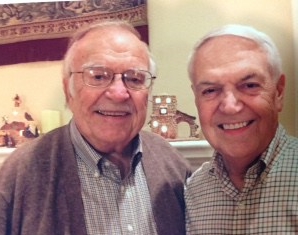
Eternal life is not a cliché to my brother, Jay, who passed from this physical life last Friday morning at age 83.  Although suffering for more than a year with a weakened heart and the constant pain of an inoperable broken hip, he died in a supremely restful state, surrounded by his wife and three adult children.

My brother fully embraced the promise of Jesus, “I tell you most solemnly, whoever listens to my words, and believes in the one who sent me, has eternal life; without being brought to judgment he has passed from death to life.” (John 5:24 JB)

Over the last several years God blessed my brother and me by leading us to become brothers in Christ as well as brothers by blood.  Because of a five year difference in age, we were not necessarily close when growing up together.  We were also different in a number of ways.  He was athletic, lettering in three sports in high school.  My interests involved music and debate.  He was good at math and became an engineer.  My favorite courses were history and English, and I became a lawyer.

As we moved into adult life we competed indirectly, he working for Exxon and I for Mobil, but God had a longer term plan.  Ironically, our two companies merged into ExxonMobil and we became retirees of the same company.  In the same way, God drew each of us into a closer relationship with his presence, and thereby into a closer relationship with one another.

When someone close to you dies, a little bit of your life dies as well.  But because of God’s promise of eternal life and the resurrection, we can expect full restoration of what has been lost.

While my brother’s body no longer lives, his love for his wife, children and grandchildren continues.  His love for the men in his Bible study and fellowship lives on.  His good works for God’s kingdom will accompany him into the resurrection, according to Anglican Biblical scholar, N. T. Wright. 

God created all living matter with an instinct to live and not die.  For only his human creation, did he join its physical nature with a spirit and soul capable of life beyond the death of the physical nature.  As the Psalmist says, we are “fearfully and wonderfully made.” (Psalm 139:13)

Rest well, my brother.  For God loved you so much that he gave you his only Son, that as you believed in him, you have not perished, but will live forever. (John 3:16)

God’s Restrained Announcement

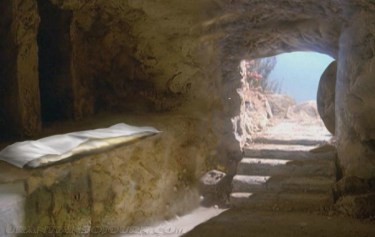
Empty-Tomb-Picture-07We have just celebrated the most important event of our Christian faith – Jesus’ resurrection. Yet, as significant as this event is for us and human history, God appeared restrained at the time in bringing it to people’s attention.

There was no proclamation from a choir of angels like at Jesus’ birth announcing that “A Savior has been born unto you.” (Luke 2:11) In fact, God kind of let Jesus’ followers stumble into what had happened. On the morning of Jesus’ resurrection, we have a couple of angels asking the women who had come to anoint Jesus’ body, “Why do you look for the living among the dead?” (Luke 24:5)

The angels went on to explain that Jesus had risen from the dead just as he said he would, but the women did not understand. For them, the only conceivable explanation was that someone had taken Jesus’ body. Peter and John, upon hearing the women’s report had a foot race to the tomb only to find that the linens which Jesus had been wrapped in were neatly folded in two different places. Neither did they understand, although Luke reports that Jesus did appear later to Peter. (Luke 24:34)

Jesus also appears to Mary Magdalene, and two of the disciples on the road to Emmaus, but there was no recognition of who Jesus was until he called Mary by name and broke bread in front of the disciples.  Even though the risen Jesus had met with the apostles on two separate occasions, they didn’t seem to immediately recognize him later on the seashore after they went back to fishing. (John 21:1-14)

In spite of all the times that Jesus told the disciples before his crucifixion that he had to suffer death and rise from the dead, they did not understand.

Why?  It was not until they had personally encountered the risen Jesus and were anointed with the Holy Spirit at the Feast of Pentecost that they began to fully comprehend what Jesus’ resurrection meant for them and human history. St. Paul reports that Jesus appeared to more than 500 at one time. (1 Cor. 5:6)

Realizing that the resurrection was not only for Jesus, but also for them and their followers radically changed the way they lived, modeled on the way Jesus lived.

Like the disciples and the early Christians, we too, need to personally experience the presence of the risen Jesus and the anointing of the Holy Spirit before we can comprehend the effect of his resurrection on our lives. No announcement, no teaching by itself will get the job done.

That was true for me 40 years ago on an October evening when I had a personal encounter with Jesus. Through God’s grace and the power of his Holy Spirit he opened my mind and heart to the reality of his risen presence in my life.

“Here I am! I stand at the door and knock. If anyone hears my voice and opens the door, I will come in and eat with him, and he with me.” (Rev. 3:20)

Following Jesus at a Distance

After Jesus’ arrest, we read in the Gospel of Mark, “Peter followed at a distance right into the courtyard of the high priest.  There he sat with the guards and warmed himself by the fire.” (Mark 14:54)

Like Peter, we may profess our allegiance to Jesus that “even if all fall away, I will not,” or we may recite the creed every Sunday in our church declaring that we believe in “God the Father almighty, Creator of heaven and earth, and in Jesus Christ, his only Son, our Lord.”

Yet, like Peter, there may also be times when we keep our distance from Jesus.  We may fail to show up for a daily prayer or quiet time with the Lord that we have intended for the beginning of each day.  After a busy week of work, and a Saturday filled with our kid’s sports activities, we may let a round of golf take precedence over our attending church on Sunday.

We may fail to respond to a friend’s request for help because it is not convenient.  We may put a higher priority on our comfort as Peter did when he sat with the guards and warmed himself by the fire.

Like Peter, we may be thrust into circumstances where we are reluctant to be identified with Jesus.  In Peter’s case, it was the guards, the elders and the mob.  For us, it may be a boss who has disdain for God, or social friends who consider any reference to Jesus as foolishness.

Early in my career when I would attend a company meeting followed by cocktails and dinner, the conduct could sometimes get a bit macho and boisterous. It was not unusual for the conversation to involve exaggerated exploits, the building up of self and the putting down of others, off-color jokes, gossip, and the fawning over whoever might be the most senior person present. At some point I began to realize that when I went along with this kind of conduct I was distancing myself from Jesus. It was so easy to go with the flow and tempting to want to be a part of the group. It required a decision on my part not to participate.

Just as Peter’s faith was tested, so is our faith tested in numerous ways, some obvious and significant, and some subtle and small.  From a faith perspective, the latter can cause as much harm as the former because of their corrosive effect on our relationship with Jesus.

The world inclines us to keep our distance from Jesus, while Jesus bids us to draw near.  He says, come to me all who are burdened from the cares of this world and I will give you rest.  Come to me all who are thirsty for meaning in life and I will give you understanding.  He warns us that in the world we will have trouble, but assures us that he has overcome the world.

He says step across the distance that separates us, and you will experience my love, my strength and my peace.


God’s Shredder

94433241In connection with Jeremiah’s prophesy about God establishing a New Covenant, there is a subordinate phrase that hardly gets any attention from Biblical commentators.  Yet, this phrase constitutes one of the great promises of the Bible.
“The time is coming, declares the Lord, when I will make a new covenant with the house of Israel and the house of Judah.  I will place my law within them, and write it upon their hearts… All from the least to greatest shall know me, says the Lord, for I will forgive their evildoing and remember their sins no more.” (Jeremiah 31:31, 33, 34)

As Christians, we are quite familiar with God’s promise to forgive us of our sins when we repent of them.  One of the instructions the angel gave to Joseph was to name the baby Mary was carrying, Jesus, “because he will save his people from their sins.” (Matthew 1:21)  Jesus talked a lot about forgiveness.

But Jeremiah promises that God will not only forgive us of our sins, he will also remember them no more!

What a promise!  This is so contrary to our human nature.  For our part, we resist forgiveness when we have been offended and we struggle with forgetting the offense.  When we have been the offending party, we also tend to hold on to the memory of our offense even if we have repented of the sin and received forgiveness.

Many years ago, when I was in my early 30’s and working for a large corporation in New York, I received a call from my father’s boss inviting me to a retirement party for my father in Iowa.  I had just been transferred to New York from Kansas City to take on a new position and I had a conflict with what I thought at the time was a very important business meeting in my new job.

I agonized over the decision for a while, but ended up opting for the so-called important business meeting and forgoing my father’s retirement party.

It didn’t occur to me at the time that I was violating the Fifth Commandment to “honor your father and your mother.”  When it finally did occur to me, I repented of my mixed up priorities and inordinate self-focus that was so prevalent at that time in my life.  Today, I can’t even remember what the business meeting was about.

While I have considerable regrets for this failure, and other past failures and sins, I take great  comfort in Jeremiah’s prophesy and promise that these sins have gone into God’s shredder of repented sins and he remembers them no more.  God keeps no record of repented sins.

This promise reminds me of St. Paul’s recitation of the various actions that constitute love in First Corinthians 13 — love “keeps no record of wrongs.”  But then, as the apostle John reminds us, “God is love.” (1 John 4:16)

“A broken and contrite heart, O God, you will not despise.” (Psalm 51:17)

Building the Kingdom through Relationships

When Jesus sent out the twelve and the seventy-two to proclaim the Kingdom of God, he gave them very specific instructions. He said, “Whenever you enter a house, stay there until you leave that town.” (Mark 6:10)  “Do not move around from house to house.” (Luke 10:7)

Although these two instructions might appear a bit obscure in the story the gospel writers were describing, they convey an important message to all Christians who are trying to share their faith with others: Build relationships first, serve people’s needs, and then share your faith and proclaim the kingdom of God.

How often have we tried to share our faith or evangelize someone without having first established a relationship?  Without the credibility of a relationship, without finding out and serving someone’s needs, our words about God and the life he offers through his Son and the Holy Spirit may ring hollow.

After Jesus called Matthew, he dined and spent time with Matthew’s tax collector friends.  He invited himself to lunch with another tax collector, Zacchaeus.  He stayed on two days with the Samaritans after encountering the woman at the well, and the Apostle John reports, “Many became believers.”  He obviously had a relationship with Lazarus and his sisters, Martha and Mary, because of the message they sent to him about Lazarus, “Lord, the one you love is sick.” (John 11:3)

The Parable of the Yeast would seem to confirm the need of our mixing it up with the world in our relationships.  “The kingdom of heaven [God] is like yeast that a woman took and mixed into a large amount of flour until it worked all through the dough.” The yeast, which is the good news, needs to mix with the flour, which is the world, in order that the dough, God’s kingdom, can rise. (Matthew 13:33)

In my own walk, I can think of several people who reached out to me with sincere friendship that had the effect of deepening my faith walk.  There was Father John, who gave me instruction to join the Catholic Church when I was a young teenage boy.  We shared many hours together in our mutual love of music, in addition to his individual instructions about the faith.

When I was a young man in my mid-thirties there was Ann, a fellow teacher of Religious Education to teenagers in our church.  Ann had the radiance and joy of the Lord.  She kept inviting my wife and me to various charismatic Christian events, which resulted in my meeting Jesus in an entirely new way and experiencing a fresh outpouring of the Holy Spirit.

In my mid-40’s, I was introduced to a Christian outreach to business, Christians in Commerce, that helped me better live out my faith in the workplace.  All three founders of this ministry, who happened to live in different cities from where I lived, spent time discipling me in becoming a better Christian at work.  They offered guidance, witness and friendship, and stayed with us whenever they were in town.

Jesus instructs us to go and make disciples of all nations. Like the seventy-two, he sends us out and instructs us to build relationships, serve people’s needs and proclaim that the kingdom of God is at hand.

“Let us not love with words or tongue, but with actions and in truth.” (1 John 3:18)

Cleaning Out Our Temples

Jesus_templeDoes your temple need cleaning? 

Three different times in Paul’s letters to the Corinthians, he declares that we are God’s temple or that our body is the temple of the Holy Spirit.  “Don’t you know that you yourselves are God’s temple and God’s Spirit lives in you?” (1 Co. 3:16)

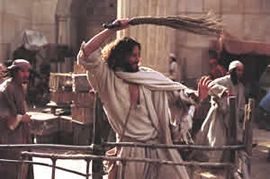
All four gospels relate the story of Jesus going up to Jerusalem at Passover and clearing the temple courts of cattle, sheep and doves and the people selling them and exchanging money.  He said, “How dare you turn my Father’s house into a market!”  He made a whip out of cords, driving them from the temple, overturning the tables of the money changers and scattering their coins.  He said, “It is written, ‘My house will be called a house of prayer,’ but you are making it a den of robbers.” (John 2:14-17; Mt. 21:12-13)

Obviously, Jesus felt passionately about upholding and protecting the sacredness of God’s temple, and he was compelled to clear it of anything that detracted from that sacredness.     

If, as St. Paul says, we are a temple of the living God, then there may be things that need to be cleared from our lives in order to maintain the sacredness of our temple.

Like many a building or structure, have we allowed things to accumulate that get in the way of our relationship with God?  Perhaps we have allowed anger, bitterness and unforgiveness to take up some of our space; maybe an addiction to opioids or pornography?  Have we allowed work or some other activity to become an idol detracting from our responsibilities to family and others?

Bishop Fulton J. Sheen in his book, Life of Christ, observes that it was naturally a problem for people who came to the temple to offer sacrifice to get ahold of the material of sacrifice.  Accordingly, a flourishing trade in sacrificial animals gradually developed closer to the temple and, for the sake of convenience, eventually moved inside the temple courts.

For the sake of convenience, do we allow our busyness and other activities to get in the way of a regular time of prayer with the Lord each day?

When I was young, I remember my mother doing “spring cleaning” every April.   She would take down our lace curtains to clean and stretch them, wash the windows and thoroughly clean the whole house.  My father would clean out the garage and basement of things that had accumulated over the winter.

Similarly, we may need to do a periodic cleaning of our temple of the Holy Spirit.  Sometimes it may require just a good vacuuming or a little dusting; other times, a junk removal service may be needed.

We can be confident that Jesus, who is experienced in clearing temples of things that don’t belong, will assist us in making our lives a fitting residence for the Holy Spirit and the presence of God!

“Listen to Him!”

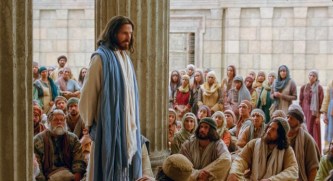
Jesus-teaching-in-the-templeAre we following God’s admonition to Peter, James and John to listen to Jesus?

At the transfiguration, Peter responded to seeing Jesus transfigured and the appearance of Elijah and Moses by offering to build three shelters for each of them.  A cloud then enveloped them, and God said, “This is my Son whom I love.  Listen to him!” (Mark 9:2-8) It was almost as if God was rebuking Peter to get serious.  Quit thinking about building shelters.  It is my son you are with.  “Listen to him!”

Like Peter, it is easy for us to get caught up with the circumstances in front of us.  We forget that Jesus is with us.  We forget to listen to all that he has said about all of the important things of life.  We forget to ask him for guidance in the daily choices of life.  Yet he has so much to say:

  • “Do not let your hearts be troubled. Trust in God; trust in me.” John 14:1
  • “Love the Lord your God with all your heart and with all your soul and with all you mind and with all you strength. Love your neighbor as yourself.” Matthew 22:30-31
  • “I am the way and the truth and the life.” John 14:6
  • “If anyone loves me, he will obey my teaching. My Father will love him, and we will come to him and make our home with him.” John 14:23
  • “Whatever you did for the least of these brothers of mine, you did for me.” Matthew 25:40
  • “For in the same way you judge others, you will be judged.” Matthew 7:2
  • “If anyone would come after me, he must deny himself and take up his cross daily and follow me.” Luke 9:23
  • “No one can see the kingdom of God unless he is born again.” John 3:3
  • “Remain in me, and I will remain in you. Apart from me you can do nothing.” John 15:4, 5
  • “Anyone who has faith in me, he will do what I have been doing. He will do even greater things than these.”  John 14:12
  • “If you then, who are evil, know how to give good things to your children, how much more will your Father in heaven give the Holy Spirit to those who ask him!” Luke 11:13
  • “Go and make disciples of all nations.” Matthew 28:19
  • “In the world you will have trouble. But take heart! I have overcome the world.” John 16:33
  • “And surely I am with you always, to the very end of the age.” Matthew 28:20

So much truth!  So much wisdom in what Jesus has to say to us! 

Over the last several decades we have seen the effects of people not listening to Jesus: the decline of one of God’s pillars in his plan for creation — the two parent family.  We have seen the continuous erosion of sexual morality, an entertainment industry increasingly glorifying sex and violence, and the increasing lapses of integrity among people in authority.  We have seen a crisis in opioid and other addictions, and increasing acts of violence and mass shootings in schools and public places.

Unlike Peter, James and John, we are not covered by a cloud from God, but the haze of a culture increasingly focused on self and moving away from its creator.  But through the haze, God still says, “Here is my Son, whom I love.  Listen to him!”

Who Do You Say I Am?

After the disciples had been following Jesus for a while, he asked them, “Who do the people say I am?” The disciples answered, “Some say John the Baptist; others, Elijah; and still others, one of the prophets.” 

Then Jesus pointedly asked, “But what about you? Who do you say I am?” (Mark 8:27-29)

No more hiding in the crowd; Jesus was asking the disciples, personally and individually, “Who am I to you?  Matthew quotes Peter as saying, “You are the Christ, the Son of the living God.” (Matthew 16:16)

The same question that Jesus asked of the disciples, he asks of us, “Who do you say I am?”

Like Peter, are willing to say with the same depth of conviction that Jesus is the son of the living God who became one of us, and sacrificed his life for us to save us from our sins?

Interestingly, Jesus goes on to define what is required of us to fully acknowledge that he is the Son of God.  He says we must pick up our daily cross, love as he loves and suffer as he suffered.  He says we need to die to self and give up our will for his in all things.  The following story illustrates an initial failure of this standard followed by the action of God’s grace in redeeming the outcome.

After working for a large international company for over 30 years, Jim (not his real name) sensed it was time to do something different with his life.  After several months of prayer and discernment, he accepted an opportunity to work full-time in a Christian ministry.

He informed his boss and set a date for his retirement.  A couple of months before the scheduled date, the company announced that it was merging with another company.  In order to encourage employees to stay on until the merger was completed, a retention bonus was offered to various employees, including Jim.

As a result, Jim decided to postpone his retirement and the date he would start working for the ministry.  After all, he reasoned, it was estimated to be only six months, and the retention bonus would provide an additional cushion for his retirement account.

A couple of months later Jim was flying home on a business trip, looking out the window at an interesting cloud formation, thinking about the future.  All of sudden he felt like the Lord was saying: “So, you tell me you want to work for me in ministry.  I arrange an opportunity, and now you put me off for some extra money!”  Jim said, “It was like a slap in the face.  What had I done!”

The next day Jim told his boss that he had made a mistake.  He had made a commitment to begin working for a Christian ministry and needed to keep that commitment.  He would not stay on until the merger was completed.  He would forgo the retention bonus.  As it turned out, the merger took almost two years to complete.

“For whoever wants to save his life will lose it, but whoever loses his life for me and the gospel will save it.” (Mark 8:35)

Preparing the Soil

009-parable-sower-seedIn three of the gospels, Jesus tells The Parable of the Sower, in which the sower is God and the seed is his Word.  He describes four kinds of soil onto which the seed may fall, which serves as an analogy to where our hearts may be relative to receiving and acting upon God’s Word. (Mark 4:1-20)

  • A soil that is hard and packed down so the seed cannot penetrate, resulting in Satan snatching the word before it can take root and impacting our way of life.
  • A rocky soil where God’s word is received and even welcomed, but not allowed to take root. When the first sign of trouble or persecution comes along, we forget what the word says and resort to our old ways.
  • A soil that is full of thorns where the word is heard and we want to act on it, but the worries of life, the deceitfulness of wealth, the lure of recognition and fame, and the pride of our own agenda chokes out the word from having a positive effect on our life and conduct.
  • A good soil that receives the word, provides conditions for it to germinate and grow so it can multiply thirty, sixty or even hundred times what was sown.

Notice how Jesus observes that people whose soil accepts God’s word may produce different size crops.  The more fertile the soil, the greater the yield of the seed, the more fruit it provides in a person’s life, and the more a person can be used by God to fulfill his purpose and will. 

Jesus is always knocking on the door of our hearts, waiting for us to invite him into our lives.  We have to be intentional in opening the door and inviting him in.  Once we invite him in, we need to spend time with him in prayer and with his word as given to us in Holy Scripture.   

If we are a part of a sacramental church, we should partake in all of the sacraments that are available to us, for we receive grace upon grace through them.  The Holy Spirit that we receive in baptism is particularly beneficial in opening our minds and hearts to the meaning of God’s word and his will for us in the daily choices for our lives.

Being prayed with many years ago for the release of the power of the Holy Spirit that I received in baptism as an infant made a huge difference in my life.  It opened my heart and mind to God’s word and helped the soil of my heart be more fertile for the Lord’s purpose in every aspect of my life – family, work, ministry, etc. 

John tells us that the Word existed before all else and was God; and that the Word became flesh in Jesus. (John 1: 1, 14) Paul tells us that the Word of God is Spirit and is living. (Heb. 4:12; Eph. 6:17)  The Psalmist tells us that the Word is flawless. (Ps. 30:5)  May we prepare the soil of our heart so that the Word yields a harvest many times what is sown.

“Seek the Lord while he may be found; call on him while he is near.” (Isaiah 55:6)