
 In connection with Jeremiah’s prophesy about God establishing a New Covenant, there is a subordinate phrase that hardly gets any attention from Biblical commentators. Yet, this phrase constitutes one of the great promises of the Bible.
“The time is coming, declares the Lord, when I will make a new covenant with the house of Israel and the house of Judah. I will place my law within them, and write it upon their hearts… All from the least to greatest shall know me, says the Lord, for I will forgive their evildoing and remember their sins no more.” (Jeremiah 31:31, 33, 34)
As Christians, we are quite familiar with God’s promise to forgive us of our sins when we repent of them. One of the instructions the angel gave to Joseph was to name the baby Mary was carrying, Jesus, “because he will save his people from their sins.” (Matthew 1:21) Jesus talked a lot about forgiveness.
But Jeremiah promises that God will not only forgive us of our sins, he will also remember them no more!
What a promise! This is so contrary to our human nature. For our part, we resist forgiveness when we have been offended and we struggle with forgetting the offense. When we have been the offending party, we also tend to hold on to the memory of our offense even if we have repented of the sin and received forgiveness.
Many years ago, when I was in my early 30’s and working for a large corporation in New York, I received a call from my father’s boss inviting me to a retirement party for my father in Iowa. I had just been transferred to New York from Kansas City to take on a new position and I had a conflict with what I thought at the time was a very important business meeting in my new job.
I agonized over the decision for a while, but ended up opting for the so-called important business meeting and forgoing my father’s retirement party.
It didn’t occur to me at the time that I was violating the Fifth Commandment to “honor your father and your mother.” When it finally did occur to me, I repented of my mixed up priorities and inordinate self-focus that was so prevalent at that time in my life. Today, I can’t even remember what the business meeting was about.
While I have considerable regrets for this failure, and other past failures and sins, I take great comfort in Jeremiah’s prophesy and promise that these sins have gone into God’s shredder of repented sins and he remembers them no more. God keeps no record of repented sins.
This promise reminds me of St. Paul’s recitation of the various actions that constitute love in First Corinthians 13 — love “keeps no record of wrongs.” But then, as the apostle John reminds us, “God is love.” (1 John 4:16)
“A broken and contrite heart, O God, you will not despise.” (Psalm 51:17)
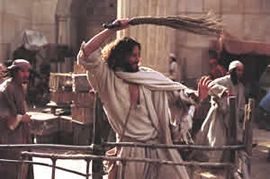 Does your temple need cleaning?
 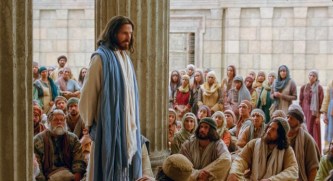 Are we following God’s admonition to Peter, James and John to listen to Jesus?
 In three of the gospels, Jesus tells The Parable of the Sower, in which the sower is God and the seed is his Word. He describes four kinds of soil onto which the seed may fall, which serves as an analogy to where our hearts may be relative to receiving and acting upon God’s Word. (Mark 4:1-20)
 As we know from listening to the story of the Magi every Christmas season, it was the star that guided and led the Magi to the Christ child.
  Christ In Life And Work